
person

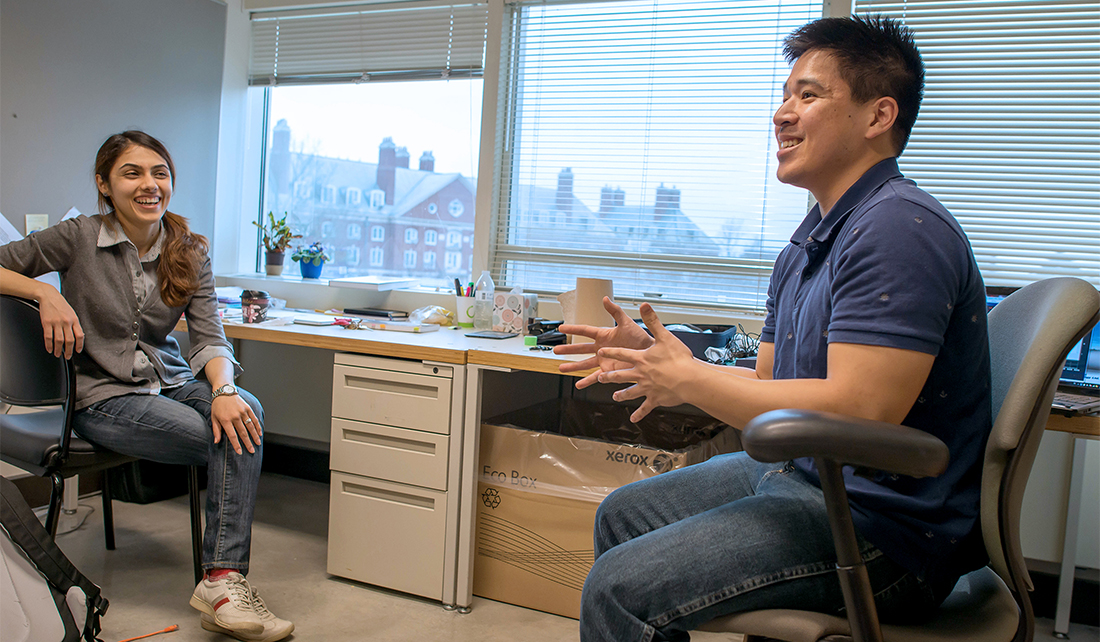
University of Illinois PhD students Pongsakorn “Tum” Suppakittpaisarn, pictured above on the right, and Fatemeh Saeidi-Rizi, pictured above on the left, study rain gardens—but not in the way you’d expect. Instead of measuring infiltration rates and pollution reduction capacity, Tum and Fatemeh want to know what happens in our brains and bodies when we see this green infrastructure practice.

A growing number of studies draw connections between access to green spaces and our physical and mental health. But, Tum said, most of that work has revolved around larger, more ubiquitous landscapes like public parks and tree-lined streets.

“We know green spaces generally are good for mental health,” he said. “But the ‘how’ and ‘why’ is still unclear, especially with rarer landscape types like rain gardens.”

So Tum and Fatemeh, along with collaborators at the University of Illinois’ Sustainability and Human Health Lab and the Health People-Health Landscape Lab at National Taiwan University, are working together to measure physical responses and changes in brain activity triggered by images of rain gardens.

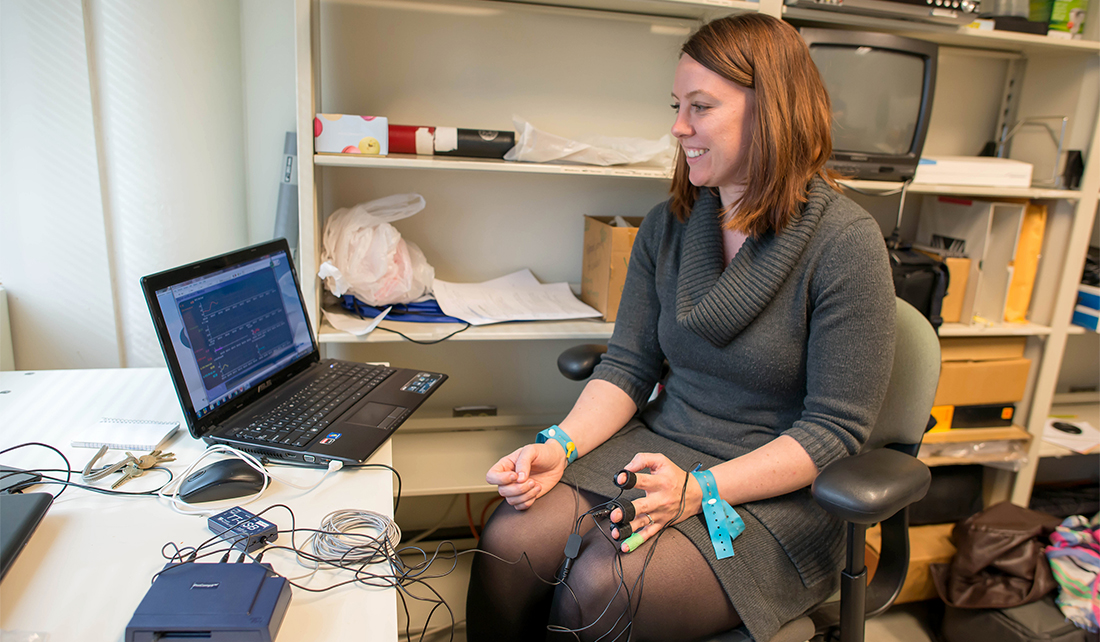
The team has compiled 216 rain garden photos taken across the U.S. into nine different videos. In Illinois, Tum will use biofeedback sensors to measure what happens to participant heart rates, body temperatures, and more when they see these videos.
Landscape_Architect_02

At the same time, Dr. Chun-Yen Chang’s team in Taiwan will use functional magnetic resonance imaging—better known as fMRI—to monitor and map changes in brain blood flow when participants are shown rain garden photos after being put through a series of tests designed to cause mental fatigue.

The researchers only began testing participants this spring, but they have a few predictions about the final results.

“It’s possible that seeing rain gardens in an urban space will help people recover from mental fatigue faster,” said Tum. “On the other hand, rain gardens with a lot of messy plants may make people feel uncomfortable, which may lead to them feeling more stress or mentally fatigue.”

IISG Instagram

🌊 Save the Date! 🌊Shipboard Science Immersion 2026Join the Center for Great Lakes Literacy aboard the R/V Lake Guardian on Lake Superior, July 7–14, 2026!✅ Open to formal & nonformal educators (grades 5–12) across the Great Lakes region.📅 Applications open January 2026Learn more: https://cgll.org/signature-program/r-v-lake-guardian-shipboard-science-immersion/ or the link in bio.#TeachingTuesday
Join the Invasive Crayfish Collaborative for an exciting webinar featuring Dr. Chris Taylor from the Illinois Natural History Survey who will provide an overview of midwestern crayfish habitat requirements, feeding, reproductive biology, and life-history.Crayfishes in the Midwest occupy almost every type of aquatic and semi-aquatic habitat in the region. They function as critically important components of those ecosystems and in many cases represent a majority of invertebrate biomass. As “keystone” species, understanding their biology and roles in ecosystems is critically important. Register for the webinar at InvasiveCrayfish.org/events1 Or the link in bio.
This season, let’s teach eco-friendly habits while spreading cheer! NOAA’s Greener Holiday Gift Guide is full of ideas to reduce waste and protect our precious water resources. Check out the full guide at the link in bio. #teachingtuesdayNOAA Marine Debris NOAA Education
The gales of November may come early, but, as usual, the nominations for the Lakies are right on time along with our official call for nominations! Brought to you by the Teach Me About the Great Lakes podcast, The Lakies (aka "quite possibly not the least prestigious Great Lakes-focused awards ceremony there is”) are back. Our goal isn't to be the Official Arbiters of Quality, but to host a fun celebration of amazing Great Lakes-related research, outreach, and communication in the inimitable Teach Me style.Nomination categories are:-Great Lakes Science Communication of the Year-Great Lakes Outreach Program of the Year-Great Lakes News Event of the Year-Great Lakes Research Finding of the Year-Coolest Thing You Learned Listening to TMATGL in 2025-Science Podcast of the Year (Non-TMATGL edition)-Great Lakes Animal of the Year-Great Lakes Non-Animal of the Year-Great Lakes Sandwich of the Year-Great Lakes Donut of the YearThe Details: -Deadline: Nominations close on December 4th.Process: It's easy (just enter the name/title and a link).-Self-Nominations: Highly encouraged. Don't be shy.We’d love to get a broad swath of work across both the serious and less-serious categories to celebrate. Feel free to pass the link on to interested people: https://bit.ly/Lakies25